
How to Tell: Bad Battery, Alternator, or Starter
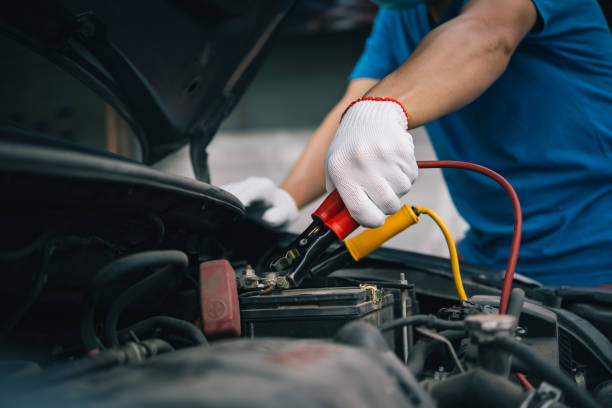
When your vehicle won’t start or has electrical problems, it can be tricky to know whether the battery, alternator, or starter is at fault. Here’s how to identify the culprit:
- Bad Battery
Symptoms:
• Engine won’t crank or turns very slowly
• Dashboard lights are dim or flickering
• Electrical accessories may not work
• Battery is old, corroded, or shows low voltage
Checks:
• Test voltage with a multimeter (should be ~12.6V with engine off)
• Try jump-starting the car; if it starts easily, battery may be weak - Failing Alternator
Symptoms:
• Engine cranks but won’t start, or dies soon after starting
• Dim or flickering headlights at idle
• Battery warning light on the dashboard
• Electrical accessories act erratically
Checks:
• Measure voltage at battery with engine running (should be ~13.5–14.5V)
• If voltage is low or fluctuating, alternator may be failing - Bad Starter
Symptoms:
• Engine does not crank at all (silent or just a click)
• Repeated attempts may be needed to start
• Lights and accessories work normally while trying to start
Checks:
• Listen for a single click or grinding when turning the key
• Tap the starter gently with a tool (sometimes temporarily frees a stuck starter)
• Test voltage at starter terminals
Quick Tips to Diagnose
Symptom Likely Problem
• Engine cranks slowly, lights dim Weak battery
• Engine cranks fine, dies soon Alternator
• Engine doesn’t crank, clicks heard Starter
• Accessories fail while engine running Alternator
Bottom line:
• Battery issues show up before the engine cranks.
• Alternator issues appear while the engine is running.
• Starter issues occur when the engine refuses to crank despite a good battery.
Proper testing with a multimeter or load tester is the safest way to confirm the problem before replacing any parts.
If you want, I can make a simple flowchart to quickly figure out whether it’s the battery, alternator, or starter, which makes troubleshooting much faster. Do you want me to do that?